Designing Conveyors for Leaching Environments: Corrosion, Chemicals & Constant Exposure
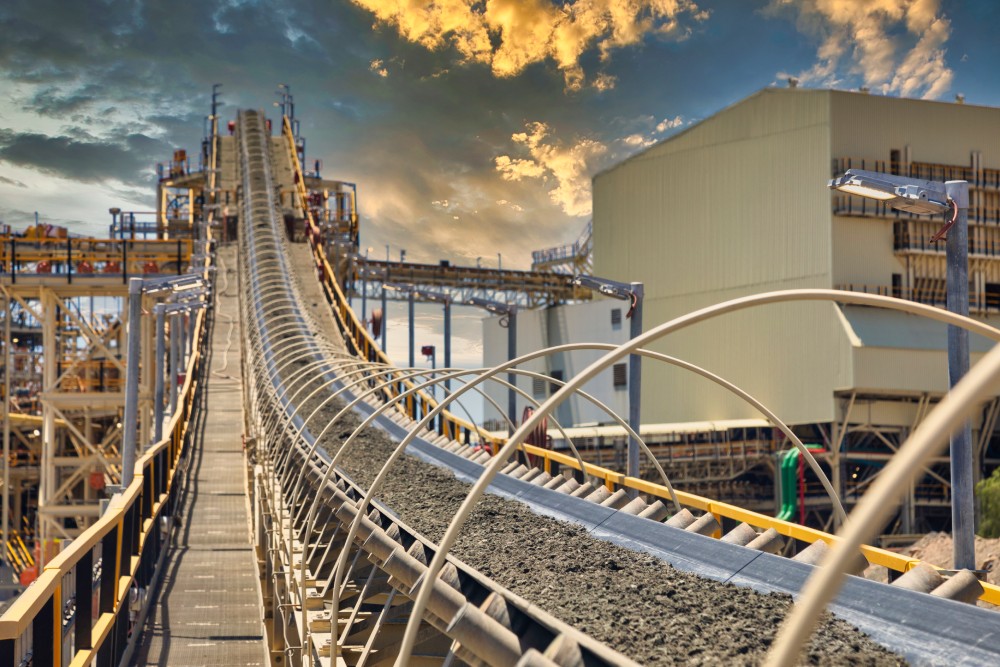
Leaching environments in mining—especially heap leach, SX/EW operations, and preparation plants handling chemically exposed or saturated material —are some of the harshest conditions for conveyor systems. Constant exposure to corrosive chemicals, saturated materials, abrasive fines, and extreme weather quickly breaks down standard equipment.
Conveyors play a significant role in the leaching process. To maintain uptime and avoid premature failures, conveyors in these applications must be engineered specifically for long-term durability in aggressive, high-exposure environments.
UNDERSTANDING THE STRESSORS IN MINING LEACH OPERATIONS
CORROSIVE CHEMICAL EXPOSURE
Leaching operations rely on aggressive chemical solutions to extract valuable minerals. In copper processing, sulfuric acid is commonly used, while gold operations often utilize cyanide solutions. These chemicals are introduced through irrigation systems on heap leach pads and can reach conveyors through overspray, runoff, or material carryback. In preparation plants, similar exposure can occur around transfer points, reclaim areas, washdown zones, and conveyors handling material that has already come into contact with leaching solutions.
Even indirect exposure, such as mist or vapor, can initiate corrosion. Over time, untreated or improperly protected steel components deteriorate rapidly, leading to structural weakening and premature failure.
PERSISTENT MOISTURE & SATURATED MATERIAL
Heap leach operations are inherently wet. Ore is continuously irrigated, meaning conveyors—especially stacker and transfer conveyors—regularly handle saturated or partially saturated material. Preparation plant conveyors may also handle damp, washed, or chemically treated material, especially where ore moves between screening, washing, dewatering, storage, and transfer stages.
This introduces several challenges:
- Accelerated corrosion across exposed surfaces
- Water ingress into bearings and rotating components
- Increased material carryback and buildup
Moisture also acts as a transport mechanism, spreading corrosive chemicals beyond the initial point of contact and increasing the overall exposure risk across the system.
ABRASIVE FINES & MATERIAL BUILD-UP
As ore is processed and stacked, it often breaks down into fine particles. In leaching environments, these fines combine with moisture to form a highly abrasive, paste-like material that adheres to belts and components.
This leads to:
- Accelerated wear on belts, rollers, and pulleys
- Buildup in hard-to-reach areas and around moving parts
- Reduced system efficiency and increased cleaning requirements
If not addressed through design, this combination of fines and moisture can significantly shorten the life of key components.
TEMPERATURE SWINGS & ENVIRONMENTAL EXPOSURE
Most heap leach sites operate outdoors, often in regions with significant daily and seasonal temperature variation. Conveyors must withstand UV exposure, thermal expansion and contraction, freezing conditions, and high heat.
These environmental factors can:
- Degrade coatings and protective linings
- Cause material fatigue and cracking
- Impact belt tracking and tension over time
Designing for these conditions is critical to maintaining long-term structural integrity.
WHY STANDARD CONVEYOR DESIGNS FALL SHORT IN MINING & PREPARATION PLANT APPLICATIONS
Conveyors designed for typical bulk material handling, dry plant environments, or lower-exposure service are not equipped to handle the constant moisture, chemical contact, and fines buildup found in leaching-related mining and preparation plant applications. While they may perform initially, they often degrade quickly under real-world mining conditions.
Common failure points include:
- Rapid corrosion due to insufficient materials or coatings
- Bearing and seal failures from moisture and chemical ingress
- Structural degradation from prolonged exposure to acidic or alkaline solutions
- Increased downtime due to frequent maintenance and part replacement
In remote mining operations, these failures are especially costly, not just in repair expenses, but in lost production and logistical challenges.
ENGINEERING CONVEYORS FOR LEACHING CONDITIONS IN MINING
Conveyor performance directly impacts leaching efficiency, so designing conveyors for mining leach environments requires a purpose-built approach focused on durability, corrosion resistance, and long-term reliability under constant exposure.
MATERIAL SELECTION: BUILT FOR CHEMICAL RESISTANCE
Material choice is the foundation of a reliable system in leaching environments. Depending on the severity of exposure, this may include:
- Stainless steel components for high-corrosion areas
- Galvanized steel for moderate exposure zones
- Specialty alloys designed for aggressive chemical environments
- Engineered plastics or composite materials for areas where corrosion must be eliminated entirely
Selecting the right materials ensures the structure can withstand both chemical and environmental stress over time.
PROTECTIVE COATINGS & LININGS
Where metal components are used, advanced coatings provide an additional layer of defense. In mining leach applications, coatings must be selected for long-term chemical resistance—not just initial protection.
Common solutions include:
- Epoxy coatings designed for acidic environments
- Chemically resistant powder coatings
- Rubber or polymer linings in high-exposure zones
Durability and adhesion are critical, as coating failure can quickly expose underlying materials to corrosion.
SEALED & PROTECTED COMPONENTS
Bearings and other moving parts are particularly vulnerable in wet, chemical-heavy environments. Protecting these components is essential to minimizing maintenance.
Design considerations include:
- Fully sealed or triple-lip sealed bearings
- Labyrinth sealing systems to block moisture and fines
- Enclosed or shielded housings for critical components
These features help prevent contamination and significantly extend service life.
DESIGNING FOR CLEANABILITY & DRAINAGE
Given the constant presence of moisture and fines, conveyors must be designed to minimize buildup and allow for efficient cleaning.
Effective strategies include:
- Open-frame designs that prevent material accumulation
- Integrated drainage paths to eliminate standing water
- Smooth surfaces that reduce material adhesion
These features reduce the time materials remain in contact with the system, limiting both wear and corrosion.
HEAVY-DUTY STRUCTURAL DESIGN
Mining applications demand robust systems capable of handling both mechanical and environmental stress. This includes:
- Reinforced frames and supports for long-term durability
- Impact-resistant components at loading and transfer points
- Structural designs that maintain integrity despite continuous exposure
The goal is not just to survive harsh conditions, but to operate reliably over years of continuous use.
REDUCING MAINTENANCE IN REMOTE MINES & PREPARATION PLANTS
In leaching environments, maintenance is inevitable, but it doesn’t have to be constant. A well-engineered conveyor system can significantly reduce maintenance frequency and severity by:
- Extending component life through corrosion-resistant materials
- Preventing contamination with sealed and protected assemblies
- Minimizing buildup through thoughtful, cleanable designs
For preparation plants, these design choices can reduce cleanup demands around transfer points, limit corrosion-related replacement work, and help keep material moving between critical processing stages.
For mining operations, this translates to fewer shutdowns, reduced labor demands, and more consistent throughput, especially in remote or hard-to-access locations.
BOOST YOUR PERFORMANCE WITH THE RIGHT CONVEYOR DESIGN
Leaching environments in mining are uniquely aggressive, combining corrosive chemicals, constant moisture, abrasive materials, and extreme environmental exposure. Conveyor systems operating in these conditions must be designed with these realities in mind—otherwise, premature failure is inevitable.
West River Conveyors specializes in designing conveyor systems for demanding mining applications, including heap leach and SX/EW operations. By engineering around corrosive solutions, saturated materials, and abrasive fines, WRC helps mining operations reduce unplanned downtime, extend equipment life, and maintain reliable material handling in some of the harshest environments in the industry.
If you’re evaluating conveyor solutions for a leaching application, preparation plant, or chemically exposed material handling area, our team can help design a system tailored to your site conditions.